
The modern workplace has changed a lot over the years. The old layouts with tall privacy walls are mostly gone. Today, most companies prefer open spaces because they make it much easier for people to talk and work together. However, this shift has brought one major problem, which is noise.
When you get rid of walls, you get a lot of background sounds. Footsteps echo on the floors, phones ring constantly, keyboards click, and the air conditioning creates a non stop hum. This constant noise is not just annoying. It actually makes it hard to focus, drains your energy, and lowers overall productivity.
When offices want to fix this noise problem, they usually buy synthetic foam panels or heavy glass dividers. While those options work, there is a much better and more natural solution. Adding strategic office greenery to the room is a proven way to create a quieter and more relaxing workspace.
Plants do not just hide background noise or look pretty. They actually change the way sound moves through a room. Here is a simple look at the science behind how indoor plants naturally soundproof an office.
1. Absorbing Sound to Stop Loud Echoes
The main reason open offices are so noisy is because they have too many hard surfaces. Materials like concrete floors, big glass windows, and flat walls act like mirrors for sound. When noise hits these surfaces, it bounces right back into the room. This creates a constant echo that makes it very hard to concentrate.
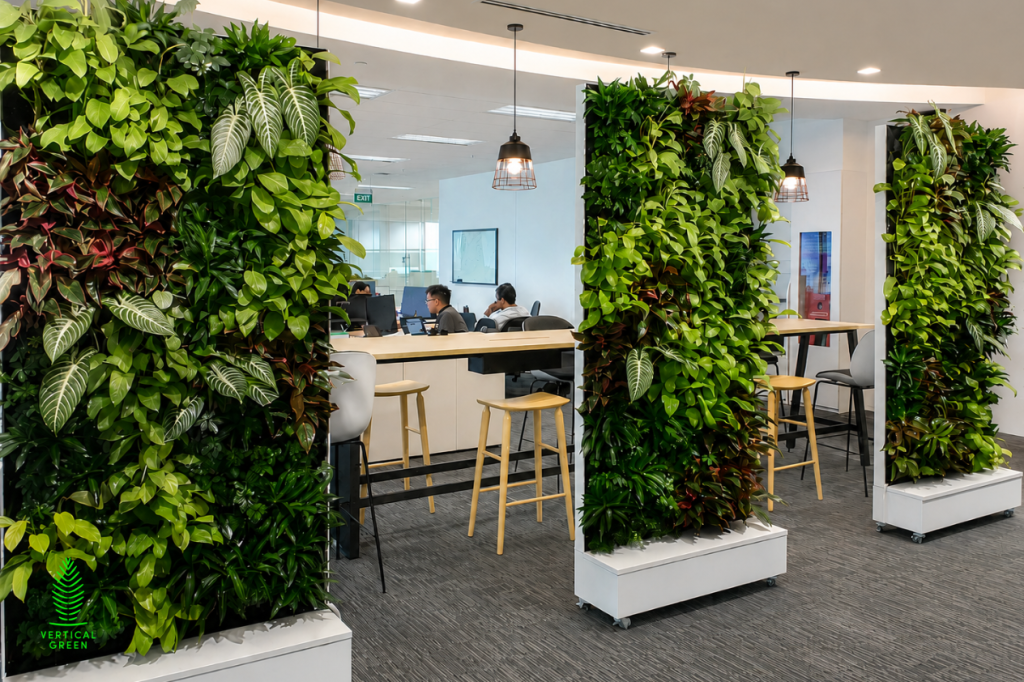
This is where office greenery completely changes the room. Unlike rigid walls, plant leaves are flexible and soft. When a sound wave hits a group of leaves, the plant acts like a cushion. The sound energy makes the leaves vibrate just a tiny bit. This small movement turns the noisy sound waves into tiny amounts of physical energy. Instead of bouncing the noise back into the room, the leaves trap it. By putting dense plants in busy areas, you basically create living walls that soak up extra sound.
2. Breaking Up and Scattering Sound Waves
Plants also help quiet an office through a process called deflection. When a sound wave hits a flat wall, it bounces off in one solid piece. Think of it like a flashlight beam hitting a mirror. Because the sound stays strong and clear, you can easily hear a conversation from the other side of the room.
A living wall or a dense row of office greenery offers a completely different surface. A plant wall has thousands of leaves, stems, and branches all growing at different angles. When a loud sound hits this uneven green barrier, the sound wave breaks apart. It scatters in a million different directions at the same time. By scattering the noise, the sharp edges of loud talking and office chatter become blurry and soft. The noise turns into a gentle hum that your brain can easily ignore.

3. The Hidden Power of the Roots and Growing Base
When people think about how plants block noise, they usually only look at the green leaves. However, studies show that a huge part of a plant’s soundproofing power happens below the surface in the roots and the base holding the plant.
Standard acoustic foam is great at catching high sounds, like sharp laughter or phone rings. But foam struggles to block low sounds. Low sounds include things like the deep, heavy rumble of building ventilation systems or elevators. These noises are very hard to stop because their sound waves are long and thick.
The roots and the special growing bases used to keep office greenery healthy act like a giant sponge for these deep rumbles. Whether the plants grow in normal soil or in modern soil free fabric systems, the base is always full of millions of tiny air pockets. The heavy sound waves get trapped inside these pockets. This unique texture muffles the deep background hums of the building, solving a major office issue that normal panels often miss.
Using Proven Materials for Maximum Results
To get the best noise control, choosing the right material base makes a huge difference. For moss walls and artificial greenery, using a premium polyester acoustic panel backing is a great solution. This specific panel is fully tested and proven for sound absorption, boasting an excellent Noise Reduction Coefficient rating of 0.8. This means the material actively absorbs 80 percent of the sound that hits it and reflects only 20 percent, making it ideal for controlling echoes and improving speech clarity in busy environments. Whether using these specialized panels or our live plant setups, everything is built to trap and soften office noise perfectly.
The Main Lesson for Office Design
When you look at how plants absorb and scatter sound, it is clear that indoor nature is not just for decoration. Using live plants to improve office acoustics is a smart way to design a better workspace.
By replacing cold, plastic sound barriers with healthy office greenery, companies can easily lower noise levels, reduce employee stress, and design a beautiful space built for deep focus and wellness.
Seamless Integration. Zero Compromise.
Whether it is a minimalist green ceiling or a high-traffic social hub, we help leading brands bridge the gap between architecture and nature. We provide the precise design expertise and the sustainable systems needed to make greenery a permanent, worry-free part of your brand identity.